Q3 2024 Sustainability Investment Analysis
Our analysis of capital allocation towards circular economy initiatives across the top 20 major fashion conglomerates. Spoiler: Marketing spend still outpaces R&D by 4:1.
The fashion industry is undergoing a systemic, forced shift. Historical margins built on opaque tier 3 and 4 sourcing are collapsing under the weight of upcoming EU directives (like the Corporate Sustainability Due Diligence Directive) and volatile raw material pricing. We separate actionable strategy from performative sustainability.

Dive deep into the operational pillars necessary for survival in the next decade of retail.
Opaque sourcing is an existential risk. Learn to map tier 1-4 suppliers, identify critical vulnerabilities, and implement active multi-sourcing strategies.
Data-driven analysis of next-generation materials. We strip away the marketing to assess real lifecycle impacts and commercial viability.
Navigating the complex web of the EU Strategy for Sustainable and Circular Textiles and emerging global mandates.
Replace guesswork with hard math. Use our calculators to benchmark operations against current industry standards.
Quantify the CO2 footprint and water usage impact of shifting material compositions from virgin polyester to recycled alternatives.
Launch ToolModel product profitability scenarios under varying raw material, logistics, and carbon taxation cost pressures.
Launch ToolA weighted matrix tool to evaluate potential factory partners on environmental metrics, labor practices, and financial stability.
Launch ToolCalculate projected polybag and carton waste volumes across varying SKU counts and order volumes.
Launch ToolWe aggregate data from across the sector, stripping away PR spin to look at actual capital expenditure and sourcing shifts.
Our analysis of capital allocation towards circular economy initiatives across the top 20 major fashion conglomerates. Spoiler: Marketing spend still outpaces R&D by 4:1.
Surveying 15,000 global consumers on what they claim they want versus what point-of-sale data shows they actually pay a premium for.
Baseline metrics for dyeing and finishing facilities across Bangladesh, Vietnam, and Turkey. Essential for auditing tier 2 suppliers.
| Metric | Industry Avg | Target |
|---|---|---|
| Recycled Content | 12% | 45% |
| Renewable Energy (Tier 1) | 18% | 100% |
| Living Wage Gap | 32% | 0% |
| Water (L/kg textile) | 100 L | < 40 L |
*Averages based on consolidated public reporting from top 50 global apparel brands as of Jan 2024.
Visualizing the shift from linear, opaque systems to circular, transparent networks.
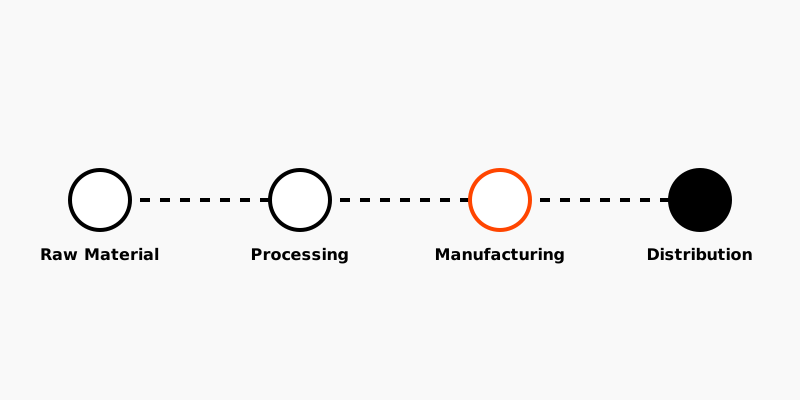
Figure 1: Simplified flow demonstrating integration of reverse logistics required for upcoming Extended Producer Responsibility (EPR) mandates.
A structural approach to designing for disassembly and recycling at the product development stage, moving beyond simple material swaps.
A rigorous framework for assessing new fibers, avoiding greenwashed "bio-based" plastics that fail LCA scrutiny.
Data architecture requirements for compliance with the impending DPP regulations for textiles sold in Europe.
Why traditional social audits fail, and how to implement worker voice tools and living wage assessments that yield actual visibility.
Tactics for tracing raw materials back to the farm or chemical plant level, essential for mitigating scope 3 emissions.
Explore our full suite of tools and research to build a resilient operational strategy.
Access All ToolsFor organizations requiring tailored supply chain restructuring.
Comprehensive mapping of tier 2-4 dependencies to identify single points of failure.
Data architecture consulting to prepare for the European Digital Product Passport mandates.
By 2028, non-compliant brands face market exclusion in the EU and severe margin penalties from institutional investors globally.
Weekly analysis of fashion operations, raw material pricing, and regulatory shifts. No marketing fluff.